Old National Road Bridge
07:00–19:00
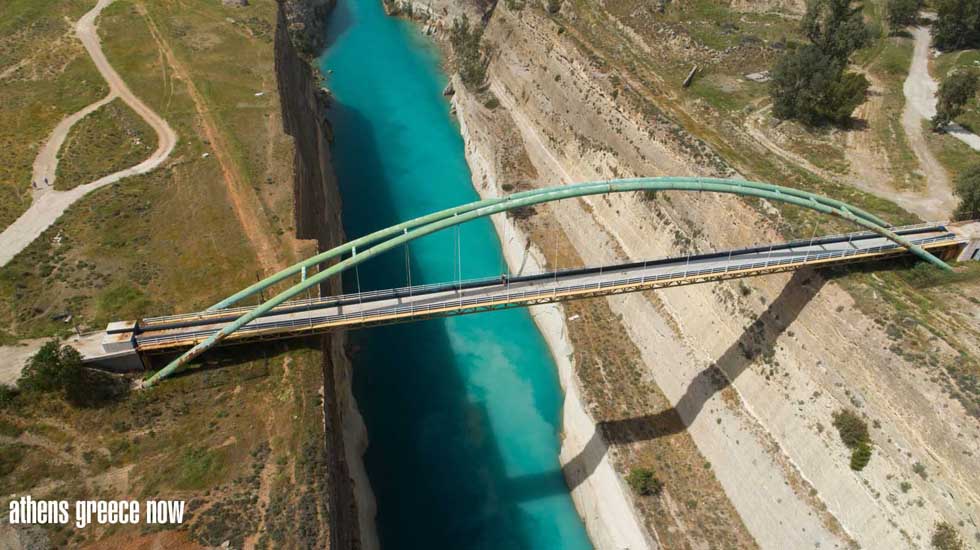
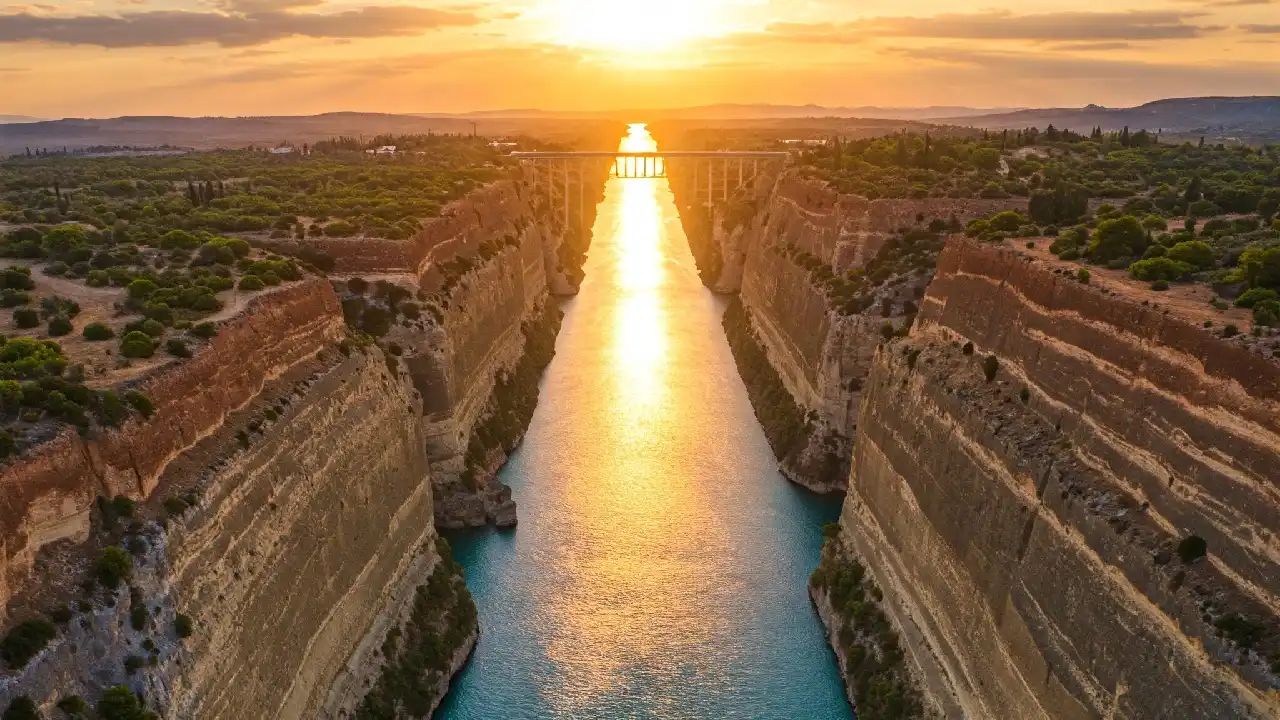
Direct overhead view of the canal floor from the center of the bridge.

The Corinth Canal cuts a narrow channel between mainland Greece and the Peloponnese, and its physical scale has defined maritime routes since 1893. Knowing the canal's length, width, and crossing duration helps visitors plan viewpoints, understand vessel schedules, and time their arrival for the best vantage.
Quick answer
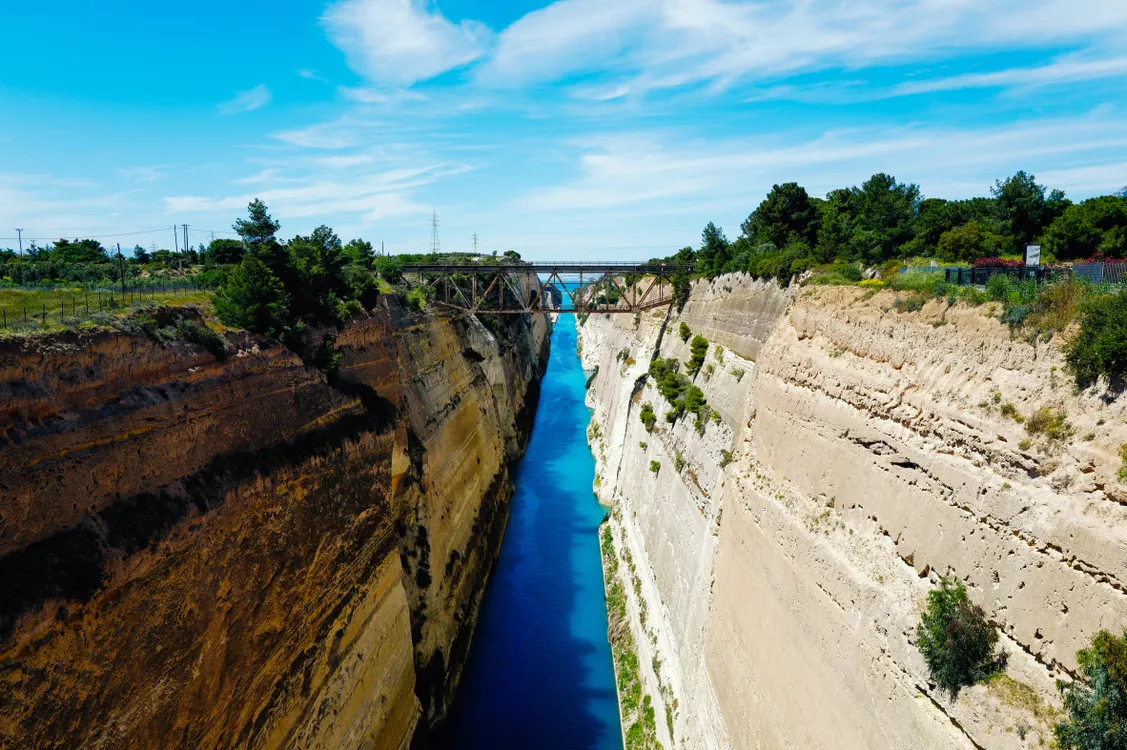
The Corinth Canal measures 6.4 kilometers (approximately 4 miles) from end to end, with a channel width of 21.4 meters at water level and vertical limestone walls rising 63 meters. Vessel transit time averages 10 to 15 minutes depending on ship size and speed restrictions. The crossing is brief but visually striking due to the canal's extreme narrowness relative to its depth and the sheer verticality of its rock faces.
The Corinth Canal was excavated through solid limestone to a depth of 8 meters below sea level, creating one of the world's narrowest navigable waterways relative to its wall height. The 6.4-kilometer corridor runs in an almost perfectly straight line, and standing on the pedestrian bridge that spans the channel, the entire length is visible on clear days—the far end appears as a sliver of blue framed by vertical stone. Understanding corinth canal how long the crossing takes matters if you want to watch a vessel pass. Cruise ships, yachts, and tankers that meet the 21.4-meter beam restriction move slowly through the cut, engines throttled to minimize wake against the walls. The typical 10- to 15-minute passage allows time to reposition along the bridge or descend to the canal floor for photographs at different angles. Larger ships often wait for tugboat escort, which extends the spectacle. The canal operates around the clock most days, though vessel schedules are irregular—patience is required. The limestone walls themselves tell the story of 19th-century engineering ambition. Excavation began in 1881 and required the removal of 12 million cubic meters of rock using dynamite and steam shovels. The result is a man-made gorge whose proportions feel exaggerated when experienced in person: narrow enough that a person on one rim can clearly see faces on the opposite side, yet deep enough that the waterline lies 63 meters below the bridge deck. That vertical drop gives the canal its dramatic profile and makes it a landmark of industrial-age infrastructure. For visitors, the dimensions shape the experience. The 6.4-kilometer length means the canal is not a sprawling complex but a single, linear feature that can be apprehended in one visit. The submersible bridge at the western end and the fixed road bridge near Isthmia provide complementary perspectives—one at water level, the other suspended above. Each offers a different answer to the question of scale. Most travelers spend 30 to 60 minutes at the site, enough time to walk the bridge length, descend to the small viewing platform if open, and watch for vessel traffic.
“The canal's extreme narrowness and 63-meter wall height make the 6.4-kilometer passage one of the most visually compressed maritime routes in Europe.”
A straightforward stop that adapts to your schedule, from a 15-minute photo pause to a half-day excursion. Most visitors spend 30–60 minutes at the bridge viewing area, while boat tour participants should budget 90 minutes to two hours total.
Park near the pedestrian walkway on either side of the canal. The viewing areas are immediately accessible and require no ticket—plan 15–20 minutes if you're simply taking in the perspective from above.
The full crossing takes 5–10 minutes at a casual pace. Stop at the center for the deepest sightline down the cut, where the scale of the vertical rock walls becomes clear.
If a boat tour or bungee operation is running, head to the Isthmia-side access road. Budget 45–75 minutes for a transit through the canal, including boarding and disembarkation time.
A modest interpretive display near the bridge covers construction history and engineering challenges. Allow 10–15 minutes unless you're reading every technical panel.
The best arrival window is 07:00–19:00, which offers optimal natural light for photography while avoiding peak midday congestion. Arriving during this period ensures a more efficient experience when viewing the canal from the bridge.
Mild, 18°C–24°C
Pleasant temperatures ideal for walking the bridge area without excessive heat.
Mild, 20°C–26°C
Clear skies provide consistent visibility for viewing the canal depth.
—
Early arrival minimizes wait times for parking and bridge access.
Verdict: For the most efficient visit, aim for weekday mornings during the shoulder seasons of April or October to balance favorable light with manageable crowd levels.
The Corinth Canal viewing area is accessible throughout the week, though specific hours apply on Tuesdays. Please consult the schedule below for planning your visit.
The Corinth Canal is located in Isthmia, 201 00, Greece, and is most accessible via the national road network or public transit from Athens. Travelers typically approach the site by vehicle or regional bus to reach the bridge area.
A8/E94 motorway from Athens to Isthmia exit
KTEL bus from Kifisos Station to Isthmia
Proastiakos line from Athens/Piraeus to Corinth Station
If arriving by car, aim for the parking areas near the old bridge to access the primary viewing points. Using the Isthmia exit on the A8/E94 motorway provides the most direct route to the canal bridge.
07:00–19:00
Direct overhead view of the canal floor from the center of the bridge.
07:00–19:00
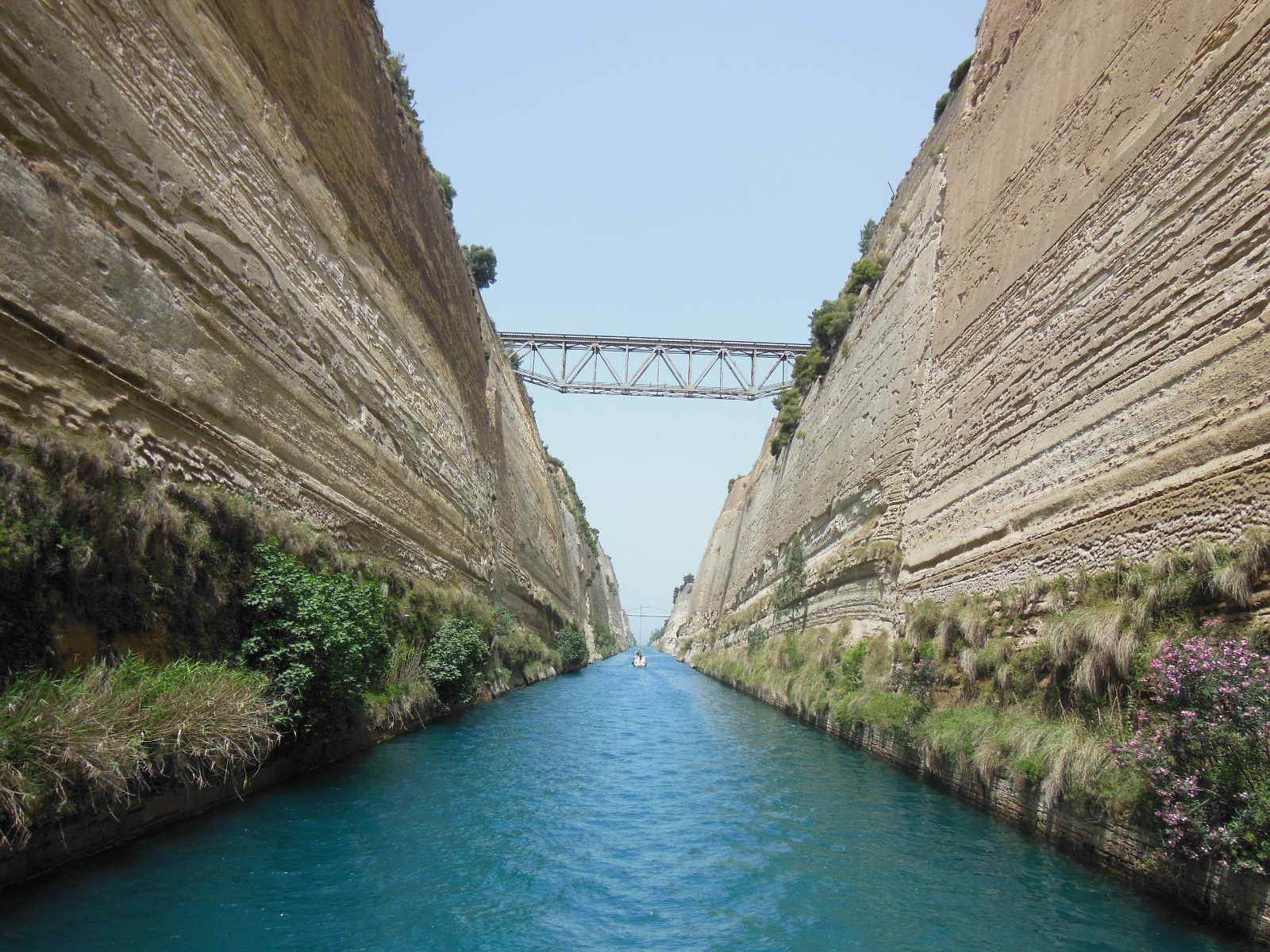
Perspective focusing on the steep limestone walls meeting the water level.
07:00–19:00
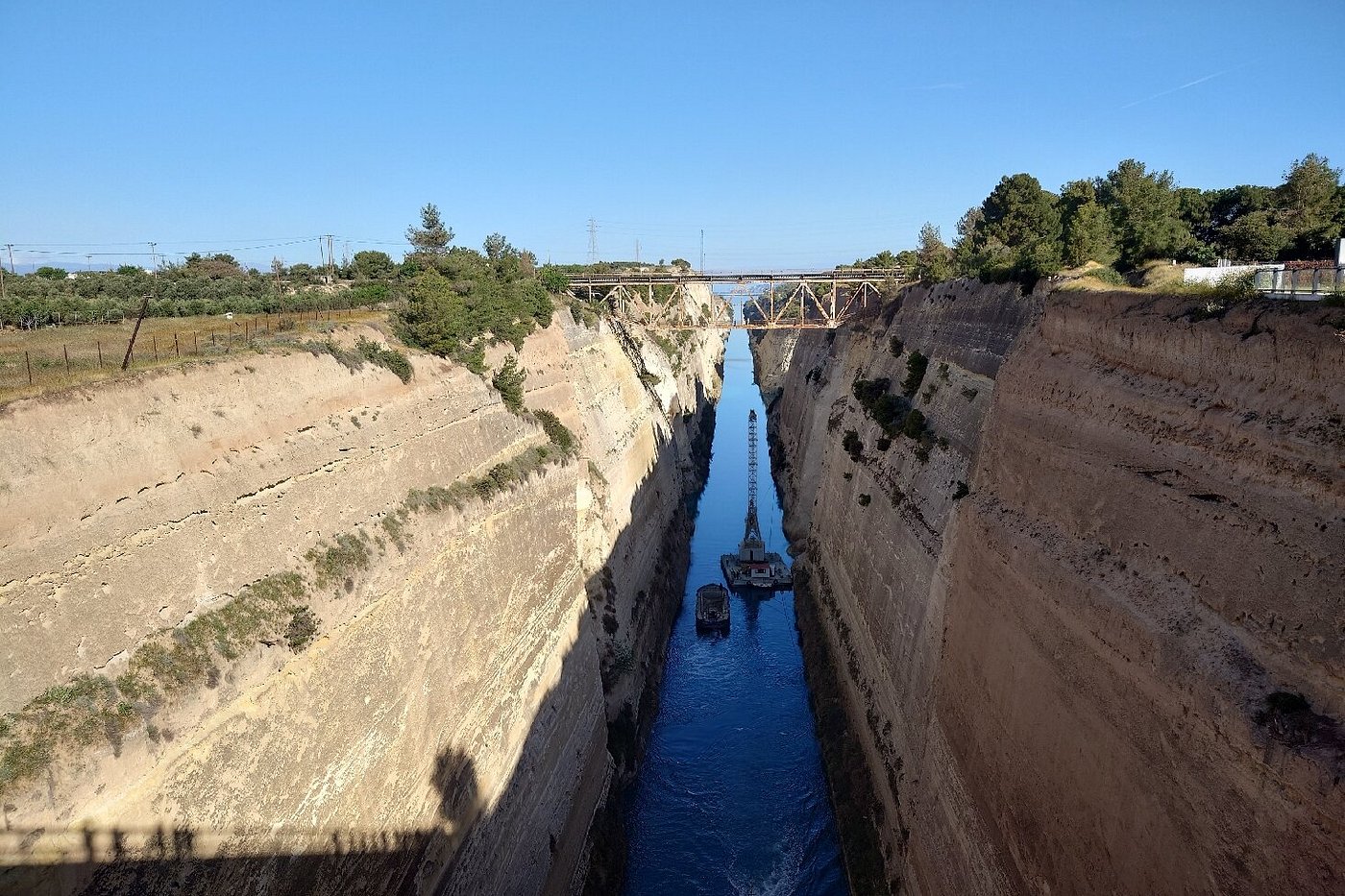
Side-angle view capturing the narrow geometry and scale of the channel.
07:00–19:00
Wide shot capturing the transition from the open sea into the narrow passage.
Everything you need to know about corinth canal how long
A transit through the Isthmus of Corinth usually takes about one hour depending on vessel speed and maritime traffic. Commercial vessels prioritize these crossings within the narrow limestone walls. Viewing from the bridge allows for a quick stop during your broader Greece landmarks exploration.
Most visitors spend between 30 to 60 minutes when planning the corinth canal how long duration for a self-guided stop. This timeframe is sufficient to walk the bridge, observe the deep cut, and take photographs. Many travelers integrate this into a half-day itinerary.
When considering the corinth canal how long viewing time from the bridge, you only need 15 to 20 minutes to appreciate the engineering feat. There is no formal time limit for pedestrians standing on the bridge walkway. It is a flexible stop suited for any schedule.
The corinth canal how long logistics impact your photos because light changes significantly throughout the day. We recommend arriving during the optimal morning or afternoon light to capture the vertical rock faces. Midday sun often creates harsh shadows in the gorge.
The Corinth Canal remains open almost daily, though Tuesday has specific evening hours. You can plan your visit around these operational times to ensure bridge access is available. Always check the current schedule before arriving at the Isthmia site.
There is no official group limit for the corinth canal how long visit duration. Large groups should simply ensure they arrive well within the operating hours to avoid congestion on the bridge. The site accommodates self-paced visitors throughout the day.